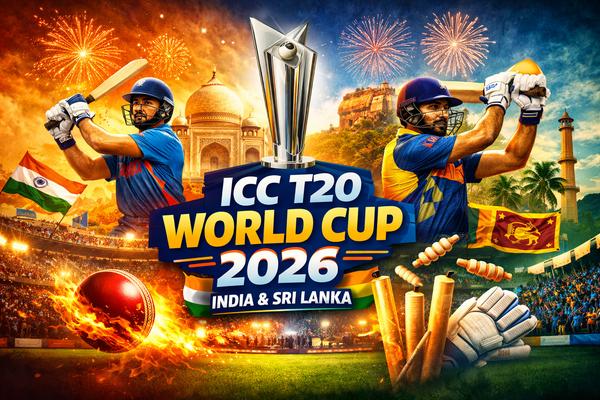
ICC T20 WORLDCUP 2026
Cricket fans, buckle up. ICC T20 WORLDCUP 2026 promises chaos, sixes flying into the stands, bowlers sweating under pressure, and captains pretending they “planned it all along.” If you love high-intensity cricket that wraps drama into three hours, this tournament will sit right at the top of your calendar.
India and Sri Lanka will host the 2026 edition, and that alone guarantees electric crowds. You already know what subcontinental pitches do to T20 cricket. Spinners smile. Batters attack. Bowlers rethink life choices.
Let’s break everything down like true cricket nerds.
Contents
- 1 Tournament Overview and What Makes 2026 Special
- 2 Host Nations: India and Sri Lanka Bring the Heat
- 3 Format and Qualification Structure
- 4 Teams to Watch in ICC T20 WORLDCUP 2026
- 5 Key Players Who Could Dominate
- 6 Pitch Conditions and Tactical Battles
- 7 The Evolution of T20 Strategy
- 8 Star Performers and Tournament Statistics
- 9 Rivalries That Could Set the Tournament on Fire
- 10 The Economic and Global Impact
- 11 Emerging Talent and Associate Nations
- 12 Captaincy: The X-Factor
- 13 Fitness, Workload, and Modern Demands
- 14 Comparing ICC T20 WORLDCUP 2026 to Previous Editions
- 15 Technology and Decision-Making
- 16 What Fans Can Expect
- 17 My Honest Take on Favorites
- 18 Final Thoughts on ICC T20 WORLDCUP 2026
Tournament Overview and What Makes 2026 Special
The ICC Men’s T20 World Cup returns in 2026 with 20 teams fighting for glory. The International Cricket Council continues its expansion model, and that move keeps global cricket alive and unpredictable.
India and Sri Lanka will host the tournament together. The Board of Control for Cricket in India and Sri Lanka Cricket will run operations on the ground. Both boards bring massive experience in organizing global events.
Why does this edition feel different? Because the T20 format keeps evolving at insane speed. Players attack harder. Teams calculate matchups with data. Analysts track strike rates like stock prices.
And fans? We just want drama.
Host Nations: India and Sri Lanka Bring the Heat
Cricket in India: Organized Chaos at Its Best
India lives and breathes cricket. Packed stadiums create noise levels that shake bowlers. Cities like Kolkata, Mumbai, Chennai, and Delhi turn matches into festivals.
India offers:
-
High-scoring pitches in some venues
-
Spin-friendly tracks in others
-
Massive stadium capacities
-
Unmatched broadcast infrastructure
Indian fans don’t just watch cricket. They interrogate every decision. Expect tactical masterclasses and ruthless scrutiny.
Sri Lanka: Skill, Passion, and Tactical Surprises
Sri Lanka brings a different flavor. Colombo’s R. Premadasa Stadium often supports spinners and slower bowlers. Galle, if used, could introduce serious turn.
Sri Lankan crowds generate raw energy. Their cricket culture blends flair with unpredictability. Remember how Sri Lanka shocked giants in past tournaments? They love ruining someone else’s script.
Joint hosting also means varied conditions. Teams must adapt quickly. That factor separates contenders from pretenders.
Format and Qualification Structure
The ICC keeps the 20-team format for competitive balance. That number allows emerging nations to test themselves against elite sides.
Here’s how the tournament structure generally works:
-
First Round (Group Stage)
-
Super 8 Stage
-
Semi-finals
-
Final
Top teams from the initial groups advance. The Super 8 stage usually splits into two groups of four. The top two teams from each Super 8 group enter the semi-finals.
Simple structure. Brutal execution.
Every game matters. Net run rate creeps into conversations after one bad loss. Teams cannot afford lazy starts.
Teams to Watch in ICC T20 WORLDCUP 2026
Let’s be honest. You already predict the usual heavyweights. But T20 cricket loves plot twists.
India: Talent Factory With Pressure Attached
India enters every ICC tournament as a favorite. The batting depth alone intimidates opponents. Explosive openers, middle-order finishers, and wrist spinners who turn games upside down.
But pressure follows them everywhere. Indian fans demand trophies, not semi-final memories. If India controls nerves, they dominate.
England: White-Ball Revolution Masters
England changed white-ball cricket after 2015. Aggression defines their approach. They attack from ball one and back their hitters regardless of situation.
They trust depth. They trust pace. They trust fearless cricket.
That formula works in T20 conditions.
Australia: Tournament DNA
Australia treats ICC tournaments like personal property. They peak at the right time. They build squads with balance.
Hard hitters. Aggressive fast bowlers. Smart captains.
Never underestimate them.
Pakistan: Unpredictable and Dangerous
Pakistan lives for chaos. One day they collapse. The next day they look unbeatable. Their pace attack often steals headlines.
In T20 cricket, unpredictability becomes an advantage. Opponents struggle to plan against them.
Sri Lanka and Emerging Teams
Sri Lanka at home can challenge anyone. Afghanistan continues rising in T20 cricket. South Africa always looks strong on paper. New Zealand thrives in tactical battles.
And never ignore associate nations. The shorter format reduces gaps between teams.
Key Players Who Could Dominate
Every T20 World Cup creates new stars. Young players use this stage to announce themselves.
Watch for:
-
Powerplay hitters with strike rates above 140
-
Mystery spinners who concede under 7 runs per over
-
Death-over specialists who nail yorkers under pressure
-
Finishers who chase 12+ runs per over
T20 cricket rewards clarity. Players who understand roles thrive.
Captains must pick the right matchups. Coaches must read conditions. Analysts must deliver data that actually helps.
Pitch Conditions and Tactical Battles
Subcontinental conditions shape strategy.
Dry surfaces encourage spin. Dew changes evening games. Small boundaries tempt big shots.
Teams must answer several questions:
-
Do we play three spinners or two?
-
Do we chase under lights?
-
Do we attack powerplay or preserve wickets?
Spinners could dominate middle overs. Fast bowlers must vary pace intelligently. Batters must rotate strike instead of chasing glory shots every ball.
Smart teams will prepare multiple plans.
The Evolution of T20 Strategy
T20 cricket in 2026 looks very different from 2007. Players no longer treat 160 as competitive everywhere. Many teams now chase 190 without blinking.
Modern strategy focuses on:
-
Maximizing powerplay scoring
-
Flexible batting order
-
Data-driven matchups
-
Aggressive field placements
Captains no longer wait. They attack early.
Fielding standards also improved massively. One athletic save on the boundary can swing a match.
Star Performers and Tournament Statistics
Below you’ll find a consolidated snapshot of relevant T20 World Cup statistics and structural data that shape ICC T20 WORLDCUP 2026 expectations.
| Category | Statistic | Detail |
|---|---|---|
| Tournament Edition | 10th Edition | 2026 marks the 10th ICC Men’s T20 World Cup |
| Total Teams | 20 Teams | Expanded format continues |
| First T20 World Cup | 2007 | Inaugural edition in South Africa |
| Defending Champion (2024 cycle) | India | Won 2024 ICC Men’s T20 World Cup |
| Maximum Titles (Men’s T20 WC) | 2 Titles | West Indies, England, India |
| Standard Match Duration | ~3 Hours | High-intensity format |
| Powerplay Overs | 6 Overs | Field restrictions apply |
| Total Overs per Innings | 20 Overs | 120 legal deliveries |
| Average Winning Score (Recent Editions) | 165–185 | Varies by venue |
| Typical Strike Rate for Top Batters | 140+ | Elite players exceed 150 |
| Economical Bowling Benchmark | Under 7.5 RPO | Strong T20 performance |
| Super 8 Qualification | Top Teams Advance | Based on group standings |
| Semi-Final Spots | 4 Teams | Top two from each Super 8 group |
These numbers shape expectations. Teams analyze them relentlessly.
Rivalries That Could Set the Tournament on Fire
You know which games everyone circles.
India vs Pakistan
This fixture needs no marketing. Billions tune in. Emotions spike. Social media melts.
Players claim they treat it like a normal game. Nobody believes that.
Australia vs England
Ashes rivalry spills into T20 cricket. Both teams attack. Both teams refuse to back down.
Expect fireworks.
Sri Lanka vs India
Regional pride adds spice. Sri Lanka at home could challenge India tactically.
These rivalries create tournament-defining moments.
The Economic and Global Impact
ICC tournaments drive serious money.
Broadcast deals bring billions. Sponsors compete aggressively. Host nations boost tourism.
Local businesses benefit from:
-
Hotel bookings
-
Transportation services
-
Merchandising
-
Food and beverage sales
Cricket events create national buzz. Governments support infrastructure upgrades. Cities showcase culture globally.
Emerging Talent and Associate Nations
Expansion to 20 teams allows associate nations to shine. Teams like Namibia, Scotland, and USA continue building competitive squads.
Shorter formats reduce performance gaps. A disciplined bowling spell and aggressive batting powerplay can topple giants.
That unpredictability strengthens global cricket.
Fans love underdog stories. T20 cricket creates them regularly.
Captaincy: The X-Factor
T20 captaincy demands quick thinking. You cannot wait five overs to correct mistakes.
Great captains:
-
Read pitch behavior early
-
Rotate bowlers creatively
-
Manage pressure calmly
-
Promote batters strategically
One bold bowling change can flip momentum instantly.
In T20 cricket, hesitation costs matches.
Fitness, Workload, and Modern Demands
Modern cricketers play franchise leagues worldwide. Scheduling remains intense.
Players must balance:
-
International commitments
-
Domestic leagues
-
Recovery periods
Fitness teams track data closely. Teams rotate players strategically before ICC events.
A fresh squad performs better in pressure tournaments.
Comparing ICC T20 WORLDCUP 2026 to Previous Editions
Let’s compare this edition to earlier tournaments.
Compared to 2007
The 2007 edition introduced T20 cricket to global audiences. Players experimented freely. Teams lacked data depth.
2026 teams will rely on analytics heavily. Batters practice scoop shots and reverse laps routinely.
The format matured massively.
Compared to 2016
The 2016 tournament delivered dramatic finishes. Carlos Brathwaite’s four consecutive sixes remain legendary.
Expect similar last-over thrillers in 2026. But expect higher baseline scoring rates.
Compared to 2024
India won the 2024 edition in a gripping campaign. That victory resets expectations.
India will aim to defend strongly in 2026. Other teams will study their blueprint carefully.
Technology and Decision-Making
Technology influences modern cricket significantly.
-
DRS decisions shape key moments
-
Data analysts provide matchup insights
-
Wearable tech tracks fitness
Teams integrate analytics into strategy sessions daily. Coaches demand measurable output.
T20 margins remain razor-thin. One review decision can change tournament trajectory.
What Fans Can Expect
If you plan to attend matches, prepare for sensory overload.
Expect:
-
Packed stadiums
-
Loud chants
-
Colorful team jerseys
-
Nail-biting finishes
Television viewers will enjoy advanced broadcast graphics, predictive analytics, and immersive camera angles.
Social media will explode after every upset.
My Honest Take on Favorites
India will enter as strong contenders due to home conditions. England will challenge aggressively with fearless batting. Australia will never fade quietly.
But T20 cricket refuses predictability. One inspired player can dismantle even the strongest squad.
If you ask me for a dark horse pick, I might lean toward Afghanistan. Their spin attack thrives in subcontinental conditions.
Of course, T20 cricket loves making experts look foolish.
Final Thoughts on ICC T20 WORLDCUP 2026
ICC T20 WORLDCUP 2026 combines explosive cricket, passionate crowds, tactical innovation, and global intrigue. India and Sri Lanka will deliver dramatic atmospheres and challenging conditions.
Twenty teams will chase one trophy. Only one captain will lift it. The rest will analyze what went wrong.
Expect high scores. Expect spin duels. Expect emotional rollercoasters.
And when that final over begins with 12 runs needed and two wickets left, you’ll sit on the edge of your seat like the rest of us.
Because T20 cricket never disappoints.