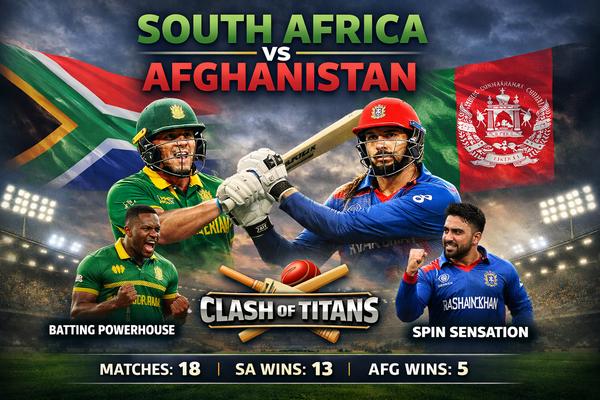
South Africa vs Afghanistan Cricket Matches
Introduction
You want excitement when these two teams meet and I get that. I feel the same twitch in my chest before any SA vs AFG match. I will walk you through their full history across formats, highlight the turning points, and point out players who tilt the scales.
Contents
- 1 Overall head-to-head and context
- 2 Test cricket encounters
- 3 One-Day Internationals (ODIs) the full story
- 4 T20 Internationals where the fireworks happen
- 5 Major tournaments and turning points
- 6 Year-by-year glance
- 7 Statistical leaders and records
- 8 Anatomy of key games what swung the results
- 9 Pitch and conditions analysis
- 10 Player rivalries and matchups
- 11 Coaching, selection, and leadership choices
- 12 Fan culture and media narrative
- 13 Comparison: batting strengths vs bowling strengths
- 14 Common myths and clarifications
- 15 Quick tactical tips for fantasy players and captains
- 16 Predictions and what to watch next
- 17 Deep statistical breakdown and trends
- 18 Player spotlight Afghanistan
- 19 Player spotlight South Africa
- 20 Leadership and captaincy moments
- 21 Youth and future pipeline
- 22 Betting, fantasy, and fan wagers what matters
- 23 How commentators framed the rivalry
- 24 Practical guide for watching the next SA vs AFG clash
- 25 Final thoughts
- 26 Statistical table (ESPNCRICINFO)
Overall head-to-head and context
The two teams developed their rivalry quickly once Afghanistan rose through international ranks. South Africa started with a clear numerical edge, but Afghanistan pushed back with bold performances. The meetings reflected development paths, one focused on fast bowling depth and the other on spin craft and fearless batting. The overall head-to-head record favors South Africa, but the gap tightened as Afghanistan learned from high-level exposure.
Test cricket encounters
Afghanistan holds Test status and South Africa remains a Test powerhouse, but scheduling kept the teams apart so far. The boards did not prioritize a bilateral Test between them, and that reality limited opportunities for a long-form assessment. Fans and pundits still imagine a Test clash because it would reveal deeper technical contrasts and test patience across five days.
One-Day Internationals (ODIs) the full story
ODIs produced the most contests between the sides and gave the clearest trend lines. South Africa retained the upper hand across many early ODIs while Afghanistan grew more dangerous in home and neutral conditions. The 2024 UAE series marked a notable swing when Afghanistan secured a series win and stunned observers with a massive victory.
ODI tactical patterns and players to watch
Afghanistan relied on spin control and top-order intent to unsettle South Africa in several ODIs. South Africa countered with power at the top and disciplined seam spells that changed mid-inning momentum. Rahmanullah Gurbaz, Rahmat Shah, Kagiso Rabada, and Ryan Rickelton appear repeatedly in match-winning contributions.
T20 Internationals where the fireworks happen
T20s delivered the biggest spectacle and the clearest contrasts between style and temperament. South Africa produced clinical bowling shows while Afghanistan often packed unpredictability through wrist spin and improvisation. The 2024 T20 World Cup semi-final became a headline match after South Africa bowled Afghanistan out cheaply and chased with ease.
T20 strategies and standout performers
Afghanistan used wrist spin and charged starts to unsettle opponents in T20s and sometimes it worked spectacularly. South Africa built plans to target Rashid Khan early and to use raw pace later in the innings. Marco Jansen, Kagiso Rabada, Rashid Khan, and Omarzai filled highlight reels and forced captains to rethink match-ups.
Major tournaments and turning points
Global tournaments magnified the rivalry and accelerated reputations for both teams. Afghanistan reached late stages in T20 competitions, which increased respect and pressure on South Africa. South Africa responded with dominant tournament displays that reminded observers of their depth and adaptability. Those tournament results shaped public perception far more than bilateral friendlies.
Year-by-year glance
2018 and 2019 offered early limited-overs contests where South Africa controlled most sessions and Afghanistan accumulated hard-earned lessons. 2021 and 2023 produced tighter finishes and showed Afghanistan’s tactical growth against stronger oppositions. 2024 and 2025 produced the headline swings: Afghanistan earned a spectacular ODI win in the UAE in 2024 while South Africa hammered Afghanistan in the 2025 Champions Trophy group stage.
Statistical leaders and records
Several players accumulated the most runs and wickets in head-to-heads and they carried match influence consistently. Rahmanullah Gurbaz and Rahmat Shah led Afghanistan’s batting lists while Ryan Rickelton and Aiden Markram rose for South Africa. Rashid Khan and Fazalhaq Farooqi appeared as Afghanistan’s key wicket-takers whereas Kagiso Rabada and Marco Jansen spearheaded South African bowling. Those names recur in decisive overs and in scorecards that shaped series momentum.
Anatomy of key games what swung the results
Small tactical shifts caused huge scoreboard swings in several matches and coaches learned fast. Afghanistan won the UAE ODI series in 2024 by pushing aggression early and maintaining spin discipline. South Africa countered in high-profile tournaments by using batting depth and concentrated bowling spells to suffocate Afghan chase attempts.
Afghanistan 177-run win (UAE, 2024) how did they do it?
Afghanistan executed a high-pressure plan of aggressive top-order batting and tight spin bowling to build a dominant total. Their fielders supported bowlers by creating pressure through good ground coverage and direct hits. South Africa then suffered through poor shot selection and cramped running between wickets, which Afghanistan exploited ruthlessly.
South Africa 107-run win (Champions Trophy, Karachi, 2025) why domination?
South Africa combined a blistering top-order with well-timed partnerships and accurate death bowling to post a large total. Ryan Rickelton paced his innings cleverly while others pushed scoring options through the middle overs to keep the scoreboard healthy. Afghanistan tried spin counters but failed to build partnerships, and South African bowlers struck in clusters at critical moments.
T20 World Cup semi-final collapse (2024) lessons learned
Afghanistan faced relentless pace and well-executed lines that prevented rhythm from developing at the crease. South Africa targeted the Afghan top-order with short balls and accurate yorkers, and they removed key batsmen quickly. Analysts recommended technique adjustments and specific pre-match planning for Afghanistan against sustained pace on variable pitches.
Pitch and conditions analysis
Venues changed the balance between spin and pace and they often dictated match outcomes more than fans admit. Afghanistan excelled on turning tracks and dry surfaces that allowed spinners to apply pressure and control run rates. South Africa collected wins on bouncy, true tracks that amplified their pace attack and exposed batsmen to extra bounce and carry.
Player rivalries and matchups
Individual duels formed the narrative backbone of most matches and coaches often built game plans around these battles. The contest between Rashid Khan and South Africa’s middle order frequently decided T20 outcomes and forced tactical reshuffles. The duel between Afghan top-order batters and South African opening bowlers produced many memorable overs and decisive moments that swung series results.
Coaching, selection, and leadership choices
Coaches and captains shaped match temperament through selection calls and tactical tweaks before and during games. Afghanistan prioritized versatile spinners and aggressive top-order picks when conditions allowed it and rewarded players who adapted quickly. South Africa rotated pacers and experimented with batting order depth to manage workload and to expose opponents to new match scenarios.
Fan culture and media narrative
Fans reacted with pride and frustration depending on the scoreboard and recent form, and social media amplified those emotional swings. Afghan supporters celebrated grit and tournament success while South African fans demanded consistency and finals performances. Media outlets framed matches as tests of development for Afghanistan and as measuring sticks for South Africa’s tournament readiness; these frames influenced player reputations and public expectations.
Comparison: batting strengths vs bowling strengths
South Africa displayed broader batting depth and a consistent pace battery that troubled many international lineups. Afghanistan delivered high-quality spin and breakout batting that performed especially well in favorable conditions and on spin-friendly decks. The matchup produced clear winners depending on venue and toss, which made previews lively and predictions risky.
Common myths and clarifications
Fans and pundits often reduce these matches to one-line narratives, so I correct a few common myths here. Myth: Afghanistan collapses against big teams; reality: they reached major tournament semis and registered massive bilateral wins. Myth: South Africa breezes every time; reality: Afghanistan beat them comprehensively in the UAE and created several tense finishes that proved otherwise.
Quick tactical tips for fantasy players and captains
Fantasy strategists should prioritize form over reputation when choosing captains and should monitor pitch reports closely. Pick Afghan top-order batters on spin-friendly surfaces and prefer South African pacers on bouncy tracks with carry. Watch toss outcomes; the team that wins it often gains routing advantages in ODIs and short T20 contests.
Predictions and what to watch next
Expect more ODI series and scattered T20 encounters between the sides as tournament calendars evolve and franchises feed talent into national squads. Afghanistan must improve technique against raw pace if they want to close the gap in fast conditions and to push for Test status matchups. South Africa must maintain rotation and depth and avoid complacency because Afghanistan proved that smart planning and fearless batting can flip results quickly.
Deep statistical breakdown and trends
Numbers reveal patterns that casual fans miss and you can use them to identify likely match scripts. South Africa recorded more wins overall and they show stronger averages in batting and bowling across most venues. Afghanistan improved strike rates in their top order and they reduced middle-order collapses through targeted coaching and experience gained in franchise cricket. Those statistical shifts explain why Afghanistan moved from an underdog to a credible upset threat in limited overs.
Player spotlight Afghanistan
Several Afghan players became match-winners through these fixtures and you should watch their trajectories. Rashid Khan led spin attacks and produced timely wickets that derailed South African chases; his presence forced South Africa to alter batting plans repeatedly. Rahmanullah Gurbaz and Rahmat Shah delivered crucial runs in high-pressure overs and their performances carried into franchise contracts that boosted confidence and experience.
Player spotlight South Africa
South Africa used these matches to test new batters and to restore tournament rhythm among senior players. Ryan Rickelton rose after a standout century in a Champions Trophy game and Aiden Markram displayed finishing ability that resolved tense chases. Kagiso Rabada and Marco Jansen created consistent wicket pressure and they forced Afghanistan to rebuild innings on several occasions.
Leadership and captaincy moments
Captains influenced many matches through bowling changes, field placements, and risk appetite with the bat, and those decisions often decided tight games. Afghanistan’s leaders often chose attacking fields and used spinners in surprising phases to force false shots. South African captains rotated pacers to keep bowlers fresh and targeted specific batter weaknesses; those micro-decisions produced large scoreboard swings and shaped series outcomes.
Youth and future pipeline
Both countries used these matches to give young players exposure and to test bench options under real pressure. Afghanistan scouted talent through domestic tournaments and introduced promising spinners early to international heat. South Africa balanced experience with youth by rotating middle-order options to identify reliable combinations for tournament play. These youth trials often determined selection choices in the following months.
Betting, fantasy, and fan wagers what matters
If you follow markets and fantasy contests, you should watch pitch reports, last five-match forms, and toss history before locking in choices. Afghanistan’s batters increase in value on spin-friendly surfaces while South African pacers drive value on bouncy decks. Always split risk across multiple players rather than leaning on single stars because these matchups produce volatility and surprise winners.
How commentators framed the rivalry
Commentators shaped the rivalry narratives and framed results as evidence of either growth or collapse, and those frames influenced fan takeaways. Some media emphasized Afghanistan’s inspirational rise while others criticized South Africa for occasional complacency. Balanced voices pointed to context, venue, and squad rotation as critical to understanding results and to avoid misleading headlines.
Practical guide for watching the next SA vs AFG clash
If you watch the next match, start by checking the pitch and toss details and note who rested in recent franchise games. Expect the first 15 overs to set tone in ODIs and T20s, and watch the middle overs for spin battles and pacing decisions. Focus on Rashid Khan’s overs and the initial powerplay seam spells because those typically define the match story and momentum.
Final thoughts
These matches provide a joyful clash between structure and improvisation and they test talent under varied pressures. South Africa keeps a clear edge in raw numbers and depth, but Afghanistan forces attention through spin craft and fearless batting. I expect more classic innings, surprise wins, and tactical pivots as both teams continue to grow and with scheduling that gives them more chances to meet.
Statistical table (ESPNCRICINFO)
| Format | Matches played | SA wins | AFG wins | Ties/NR | Notable records |
|---|---|---|---|---|---|
| ODI | 12 | 8 | 4 | 0 | Largest AFG win: 177 runs (2024). |
| T20I | 6 | 5 | 1 | 0 | Lowest AFG T20 total: 56 (2024 T20 WC semi). |
| Test | 0 | 0 | 0 | 0 | No Tests played. |
| Overall | 18 | 13 | 5 | 0 | Largest SA win: 107 runs (2025 Champions Trophy) |