Why Bangladesh Boycott T20 World Cup?
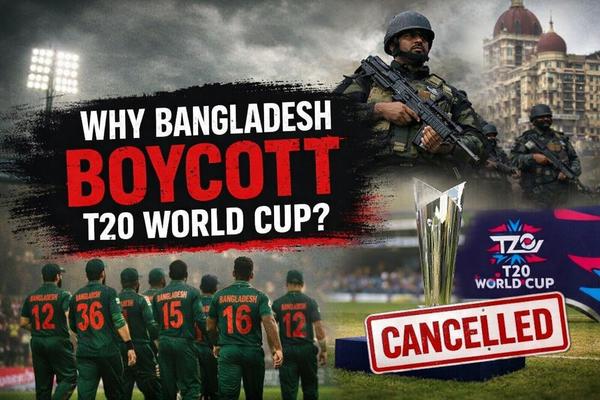
Let’s get one thing straight before we go further: Bangladesh did not announce a boycott in isolation as some fans might think. The word “boycott” largely entered conversations because of Bangladesh’s dramatic withdrawal from the ICC Men’s T20 World Cup 2026, which was co-hosted by India and Sri Lanka. This unilateral decision has been described by many as a boycott even though the official reasons were based on security concerns, political tensions, and disagreements with the tournament’s organizers.
We’ll unpack those elements below in straightforward, fan-friendly terms.
Contents
- 1 The Immediate Trigger: A Player and a Row
- 2 A Broken Negotiation With the ICC
- 3 How the World Perceived It
- 4 What Senegal Replaced Bangladesh
- 5 How the ICC Responded
- 6 Internal Confusion: Who Made the Call?
- 7 Regional Politics and Reactions
- 8 Financial Impact and Fan Reaction
- 9 Quick Stats: T20 World Cup Impact (Summary Table)
- 10 So, Why Does the Phrase “Boycott” Stick?
- 11 In Short
The Immediate Trigger: A Player and a Row
You might recall this from the Indian Premier League that winter. One of Bangladesh’s top fast bowlers, Mustafizur Rahman, played in the IPL and became the centre of controversy when his Indian franchise, Kolkata Knight Riders, dropped him from their squad. Fans and commentators in Bangladesh reacted strongly, saying the move was politically motivated. That debate spilled over into broader cricketing tensions between the two countries.
Bangladesh’s cricket board used that atmosphere as part of its rationale for saying:
-
Bangladesh did not want to play in India during this World Cup.
-
They asked the ICC to move their matches to Sri Lanka because they claimed there were real security and safety concerns with playing in Indian venues.
That request set off several weeks of negotiation and disagreement.
A Broken Negotiation With the ICC
Here’s where things took a turn most fans didn’t see coming.
Bangladesh formally asked the ICC to relocate their scheduled T20 World Cup group matches out of India. They said they would only play if all their games were held in Sri Lanka, where they felt safer and where political tensions between cricket boards were lower.
The ICC refused this request. The Council said that international tournaments had to stick to the agreed hosting schedule, and moving one team’s matches due to a government-level security stance would set a precedent they didn’t want.
At that point, Bangladesh faced a stark choice:
-
Accept scheduled group games in India and play.
-
Refuse to play and withdraw from the tournament, effectively boycotting their participation.
Bangladesh chose the latter. As a result, the ICC removed Bangladesh from the tournament and replaced them with Scotland as the next best team in the rankings.
How the World Perceived It
That withdrawal looked a lot like a boycott from the outside, especially among fans and the media. In cricket parlance, when a team refuses to honour fixtures even for safety reasons people often call it a boycott. But here’s the nuance:
-
Bangladesh did not publicly declare “We are boycotting this as a political stand.”
-
The board framed the decision as one driven by player security and scheduling disagreements.
Still, many fans and journalists described it as a boycott because the team ultimately did not participate in matches in India.
What Senegal Replaced Bangladesh
This part got a bit chaotic. When Bangladesh declined to play, the ICC had to make a rapid decision, especially with the World Cup already underway or just before it began. So, Scotland was selected to take Bangladesh’s place in the group stage.
This sudden change meant:
-
Bangladesh’s fans were left watching from home.
-
Bangladesh missed the chance to compete at one of the biggest global events in cricket.
-
It sparked conversations about fairness, safety, politics, and how international sport should handle these kinds of disputes.
At the risk of sounding dramatic for a cricket-loving nation like Bangladesh, this was a huge blow.
How the ICC Responded
Now here’s where you might expect punishment. If a team refuses to play, many sports governing bodies impose fines or bans, right?
That didn’t happen here.
The ICC formally confirmed that it would not punish Bangladesh with any sanctions for not participating in their scheduled T20 World Cup matches in India.
Instead:
-
The ICC said it understood the concerns.
-
The organization emphasized “dialogue and neutrality” rather than punitive action.
-
Bangladesh kept its rights within the ICC structure.
-
Bangladesh was also promised the hosting rights of an ICC tournament sometime before the 2031 Cricket World Cup cycle.
In other words, rather than a penalty, there was long-term goodwill and future opportunities offered.
Internal Confusion: Who Made the Call?
One aspect that added layers to this story was internal confusion within Bangladesh’s cricket administration.
Initially, government officials and the Sports Adviser stated that the government directed that the team not play in India. Later, some officials backtracked, saying it was a decision by the Bangladesh Cricket Board (BCB) and the players, not a government order.
Players themselves seemed taken aback by these headlines and denied taking a formal boycott position, even calling some official statements “funny” or confusing.
So behind the scenes, it wasn’t entirely clear who made what call and that uncertainty fed more headlines.
Regional Politics and Reactions
Bangladesh’s withdrawal didn’t happen in isolation. It intensified discussions across South Asian sport and diplomacy.
For example:
-
Pakistan initially announced they might boycott their own India fixture in solidarity with Bangladesh, because they felt the ICC mishandled the situation.
-
Later Pakistan reversed that boycott after negotiations, ICC reassurances, and encouragement from Bangladesh itself.
This entire scenario showcased how:
-
Cricket in the subcontinent often reflects larger political undercurrents.
-
Decisions on sport fixtures sometimes go far beyond pure athletic reasons.
-
Fans everywhere watched a sporting dispute turn into a diplomatic talking point.
Financial Impact and Fan Reaction
Bangladesh’s withdrawal also had significant financial implications:
-
Bangladesh was set to lose millions in revenue from broadcast rights and ICC payments because they didn’t participate.
-
Fans expressed heartbreak and disappointment, describing watching the tournament from home as “sombre” for a cricket-mad nation.
For many supporters, this was not just about cricket results but about national pride and opportunity.
Quick Stats: T20 World Cup Impact (Summary Table)
| Statistic | Value |
|---|---|
| Tournament | ICC Men’s T20 World Cup 2026 |
| Hosts | India and Sri Lanka |
| Bangladesh Participation | Withdrew before playing |
| Replacement Team | Scotland |
| ICC Penalty on Bangladesh | None |
| Future ICC Event Host Rights Promised | Yes (before 2031 cycle) |
| Reason Given for Withdrawal | Security and venue relocation disagreement |
| Pakistan Initial Reaction | Called boycott vs India match |
| Pakistan Final Decision | Played scheduled matches |
So, Why Does the Phrase “Boycott” Stick?
Let’s get real here: most cricket fans used the word boycott because Bangladesh chose not to play matches in India and exited the tournament. That feels like a boycott, doesn’t it? But technically, the situation looked like:
-
A dispute over where matches would be held.
-
A withdrawal because the team and its board couldn’t agree with the ICC.
-
A political and security context around cricket relations in the region.
So, while you can say Bangladesh boycotted the T20 World Cup in a conversational sense, the official record points toward a withdrawal over safety and scheduling disagreements, not a pure political or protest boycott.
In Short
Here’s the bottom line for any fan still trying to wrap their head around the situation:
-
Bangladesh did not play in the 2026 T20 World Cup because they asked for their matches to be moved out of India due to “security concerns.”
-
The ICC refused that request and stuck to the schedule.
-
Bangladesh then withdrew from the tournament entirely.
-
Fans and media called that a “boycott,” even if the official reasoning focused on safety and venue disputes.
-
ICC chose understanding and future opportunities over penalties.
-
The episode stirred political, sporting, and diplomatic debates across the region.
That’s the story behind the big question: Why did Bangladesh boycott the T20 World Cup? It wasn’t a simple protest. It was a complex mix of diplomacy, safety, cricket politics, and national pride.