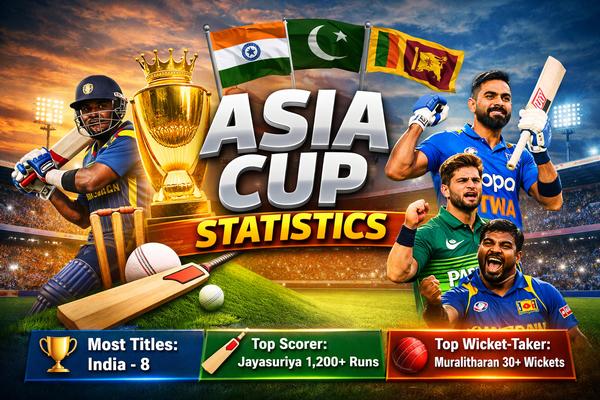
Asia Cup Statistics
Cricket in Asia hits different. Rivalries burn hotter, crowds scream louder, and every single run feels personal. You know that feeling when an India vs Pakistan match starts and your heart rate spikes before the first ball? Multiply that by an entire tournament and you get the Asia Cup.
If you love numbers as much as you love cover drives, you will enjoy this deep dive. We will break down winners, records, player performances, trends, and a few spicy insights along the way. Let’s talk Asia Cup statistics like true cricket nerds.
Contents
- 1 The Origin and Evolution of the Asia Cup
- 2 Asia Cup Winners List: Who Dominates?
- 3 Format Impact on Asia Cup Statistics
- 4 Most Successful Teams in Asia Cup History
- 5 Highest Run Scorers in Asia Cup
- 6 Highest Individual Scores in Asia Cup
- 7 Leading Wicket Takers in Asia Cup
- 8 Best Bowling Figures in Asia Cup
- 9 Asia Cup Finals: Performance Under Pressure
- 10 Bangladesh and Emerging Teams: The Nearly Men
- 11 Batting Averages and Strike Rates
- 12 Bowling Economy Rates
- 13 Memorable India vs Pakistan Asia Cup Clashes
- 14 Complete Asia Cup Statistical Summary
- 15 Trends Across Decades
- 16 Leadership Impact on Asia Cup Results
- 17 Fielding Standards and Match Outcomes
- 18 Impact Players in Recent Editions
- 19 What Asia Cup Statistics Reveal About Asian Cricket
- 20 Final Thoughts on Asia Cup Statistics
The Origin and Evolution of the Asia Cup
The Asian Cricket Council launched the Asia Cup in 1984. The council wanted a tournament that brought Asian teams together and strengthened regional cricket. The United Arab Emirates hosted the first edition, and India walked away with the trophy.
Since then, the tournament has switched formats multiple times. Organizers used the ODI format for most editions. They also used the T20 format in years that aligned with the ICC T20 World Cup.
That format switch changed statistics dramatically. ODI numbers reward patience and long innings. T20 numbers reward aggression and fearless hitting. You cannot compare them blindly, and you should not try.
Asia Cup Winners List: Who Dominates?
Let’s address the obvious question. Which team owns this tournament?
India dominates the Asia Cup more than any other team. Sri Lanka follows closely. Pakistan stays competitive but lags slightly behind in total titles.
India leads the winners list with 8 titles. Sri Lanka holds 6 titles. Pakistan has won 2 titles. Bangladesh and other teams have reached finals but have not lifted the trophy yet.
That gap tells a story. India and Sri Lanka built strong white-ball systems early. They invested in domestic structures and grooming all-rounders. Pakistan relied heavily on raw talent and pace attacks, which produced magic but not consistent tournament wins.
Format Impact on Asia Cup Statistics
The Asia Cup alternates between ODI and T20 formats. That shift changes the way teams approach games.
In ODI editions, teams focus on building innings. Captains rely on anchors who bat through 30–40 overs. Bowlers attack in phases and manage spells carefully.
In T20 editions, teams swing hard from ball one. Powerplay scoring rates shoot up. Spinners bowl aggressively in the middle overs to control run flow.
When you analyze Asia Cup statistics, you must separate ODI records from T20 records. A 300-run aggregate in T20 carries different weight than 300 runs in an ODI tournament.
Most Successful Teams in Asia Cup History
India: The Standard Setter
India sets the benchmark in this tournament. The team combines batting depth, spin dominance, and strong leadership. From the 1980s to the modern era, India keeps finding match-winners.
Players like Sachin Tendulkar, Virat Kohli, Rohit Sharma, and MS Dhoni shaped many Asia Cup campaigns. Bowlers like Anil Kumble and Ravindra Jadeja controlled games with accuracy.
India’s consistency stands out. The team reaches finals regularly and rarely exits early. That pattern explains the eight trophies.
Sri Lanka: The Silent Assassin
Sri Lanka built a reputation as the tournament specialist. The team thrives in subcontinental conditions and reads pitches well.
Sanath Jayasuriya, Kumar Sangakkara, Mahela Jayawardene, and Lasith Malinga delivered iconic performances. Sri Lanka often peaked at the right moment.
Six titles prove that Sri Lanka never plays second fiddle for long. The team may not always start as favorite, but it usually finishes strong.
Pakistan: Unpredictable but Dangerous
Pakistan brings chaos and brilliance in equal measure. The team wins two titles but reaches several finals.
Pace bowlers like Wasim Akram, Waqar Younis, Shoaib Akhtar, and later Shaheen Afridi intimidate batting lineups. Batters like Inzamam-ul-Haq and Babar Azam anchor innings with class.
Pakistan often looks unstoppable one day and shaky the next. That unpredictability makes the team fascinating but affects long-term Asia Cup statistics.
Highest Run Scorers in Asia Cup
Runs win matches. Simple logic. Asia Cup history features several batting giants.
Sanath Jayasuriya tops the all-time run charts in ODI Asia Cup history with over 1,200 runs. He combines aggression and longevity.
Kumar Sangakkara also crosses the 1,000-run mark. Sachin Tendulkar follows closely with nearly 1,000 runs in the tournament.
In T20 editions, players like Virat Kohli and Rohit Sharma dominate the run charts. Kohli’s ability to chase under pressure boosts his Asia Cup average significantly.
You notice a pattern here. Consistency across multiple editions matters more than one explosive season. The tournament rewards players who show up every time.
Highest Individual Scores in Asia Cup
Big innings define tournaments. Fans remember them for years.
Virat Kohli smashed 183 runs against Pakistan in the 2012 Asia Cup. That knock still feels unreal. He chased a massive target and made it look casual.
Younis Khan and Sanath Jayasuriya also produced huge centuries in earlier editions. Their knocks set tone and confidence for entire squads.
In T20 format, individual scores rarely cross 100. The shorter format restricts time at the crease. A 70 in T20 often carries the same weight as a 130 in ODI.
Leading Wicket Takers in Asia Cup
Batters grab headlines, but bowlers win trophies.
Muttiah Muralitharan leads the all-time wicket tally in Asia Cup history with over 30 wickets. His spin dominated Asian pitches for years.
Lasith Malinga follows with a strong wicket count as well. His yorkers crushed middle orders repeatedly.
Indian bowlers like Anil Kumble and Ravindra Jadeja also rank high. They maintain tight economy rates and strike regularly in crucial matches.
Pakistan’s pace attack contributes heavily too. Bowlers like Wasim Akram delivered match-turning spells, especially in high-pressure games.
Best Bowling Figures in Asia Cup
Single spells often flip entire tournaments.
Ajantha Mendis stunned teams with figures like 6/13 in an Asia Cup match. His mystery spin confused even elite batters.
Fast bowlers also delivered lethal spells. Malinga’s five-wicket hauls broke top orders early.
When you scan Asia Cup statistics, you notice that most best bowling figures come from spin-friendly conditions. Asian pitches reward control and variation.
Asia Cup Finals: Performance Under Pressure
Finals expose mental strength. Statistics from finals separate good players from great players.
India and Sri Lanka appear in the most finals. That fact alone proves their tournament temperament.
Sri Lanka often starts finals aggressively with bat. India frequently relies on calm chases.
Pakistan wins its titles with dominant performances rather than narrow escapes. That pattern shows the team’s tendency to peak explosively.
Final averages also tell a story. Several Indian batters maintain strong averages in finals. Bowlers from Sri Lanka often deliver their best economy rates in title matches.
Bangladesh and Emerging Teams: The Nearly Men
Bangladesh reaches multiple finals but fails to win the trophy. That trend hurts fans but shows growth.
The team improves steadily over the years. Players like Shakib Al Hasan and Mushfiqur Rahim elevate Bangladesh’s competitiveness.
Afghanistan also shakes up recent editions. The team’s spin attack troubles bigger teams consistently.
While these teams lack titles, they influence Asia Cup statistics by creating upsets and tight finishes.
Batting Averages and Strike Rates
Let’s talk efficiency.
In ODI Asia Cups, top batters maintain averages above 45. That number signals consistency across multiple games.
In T20 editions, strike rate becomes more important. A strike rate above 135 often separates impact players from accumulators.
Virat Kohli maintains one of the highest batting averages in T20 Asia Cup history. Rohit Sharma balances average and strike rate effectively.
Sri Lankan batters often rely on partnerships rather than individual strike rates. That approach reflects strategic discipline.
Bowling Economy Rates
Economy rate defines control in white-ball cricket.
In ODI editions, bowlers with economy rates below 4.5 perform exceptionally well. Spinners dominate that metric.
In T20 Asia Cup matches, bowlers aim for economy under 7 runs per over. Achieving that in high-pressure games requires skill and nerve.
Muralitharan, Jadeja, and Rashid Khan showcase how spinners control run flow. Fast bowlers rely more on wickets than economy in T20 matches.
Memorable India vs Pakistan Asia Cup Clashes
You knew this section would come.
India vs Pakistan matches in the Asia Cup produce some of the most watched games in cricket history. Fans treat them like mini World Cups.
Virat Kohli’s 183 in 2012 stands as one of the greatest chases. Pakistan’s bowlers have also delivered dramatic spells in tight contests.
Statistics from these clashes often skew toward batters. High-pressure games sometimes produce high scores because teams attack boldly.
Complete Asia Cup Statistical Summary
Below you will find a consolidated table that captures the most important Asia Cup statistics across editions.
| Category | Record / Statistic |
|---|---|
| First Edition | 1984 |
| Most Titles | India – 8 |
| Second Most Titles | Sri Lanka – 6 |
| Pakistan Titles | 2 |
| Highest Run Scorer (ODI) | Sanath Jayasuriya – 1,200+ runs |
| Other 1000+ Run Scorers | Kumar Sangakkara, Sachin Tendulkar |
| Highest Individual Score | Virat Kohli – 183 vs Pakistan (2012) |
| Leading Wicket Taker | Muttiah Muralitharan – 30+ wickets |
| Best Bowling Figures | Ajantha Mendis – 6/13 |
| Dominant Format | ODI (majority editions) |
| T20 Editions Introduced | 2016 onward (select years) |
| Frequent Finalists | India, Sri Lanka |
This table summarizes the key numbers without overwhelming you with scattered data.
Trends Across Decades
The 1980s and 1990s saw lower scoring matches. Teams focused on building innings cautiously.
The 2000s introduced aggressive openers and power hitters. Scores climbed steadily above 250 in ODI matches.
The 2010s and beyond shifted toward all-round dominance. Teams now expect bowlers to bat and batters to bowl occasionally.
T20 editions accelerated scoring trends further. Powerplay runs increased significantly compared to early ODI tournaments.
Leadership Impact on Asia Cup Results
Captains shape tournaments.
MS Dhoni led India calmly and made bold tactical decisions. His trust in spinners during middle overs often paid off.
Sri Lanka benefited from leaders like Arjuna Ranatunga and Mahela Jayawardene. They emphasized discipline and fielding standards.
Pakistan captains often relied on instinct and aggression. That approach created thrilling wins but also unpredictable exits.
Strong leadership correlates strongly with Asia Cup success. Teams that stay calm under pressure lift trophies.
Fielding Standards and Match Outcomes
Fielding rarely receives enough credit in statistics discussions.
India improved drastically in fielding standards after the 2000s. That shift saved crucial runs in tight matches.
Sri Lanka traditionally fields well, especially in the inner ring. Quick reflexes and accurate throws turn singles into pressure dots.
Bangladesh improved athleticism in recent years. That improvement helped them compete more consistently against stronger teams.
You cannot ignore fielding impact when analyzing Asia Cup statistics. Tight games often swing on one run-out.
Impact Players in Recent Editions
Modern Asia Cup editions highlight dynamic all-rounders.
Hardik Pandya contributes with bat and ball in T20 editions. Shakib Al Hasan influences games across formats.
Rashid Khan’s leg spin challenges every batting lineup. His economy rate often drops below tournament average.
These players adapt quickly across formats. Their versatility boosts their statistical footprint significantly.
What Asia Cup Statistics Reveal About Asian Cricket
The numbers reveal dominance patterns. India and Sri Lanka built structured systems and sustained success.
Pakistan produced high-impact players but lacked consistent tournament execution. Bangladesh showed steady growth but struggled to finish strong.
The tournament also highlights spin dominance in Asian conditions. Spinners consistently rank high in wicket tallies.
Batting depth continues to increase across teams. Modern squads rarely rely on only two or three core batters.
Final Thoughts on Asia Cup Statistics
Asia Cup statistics tell a story of rivalry, evolution, and dominance. India leads the trophy count, but Sri Lanka stays close behind. Pakistan adds drama and unpredictability every edition.
Individual brilliance shapes tournaments, but team consistency wins titles. Spinners dominate bowling charts, while adaptable batters top run lists.
Next time someone claims the Asia Cup feels like a mini World Cup, just show them the numbers. The intensity, history, and rivalries back that claim fully. And if your team loses in the final, blame the pitch like every true fan does.