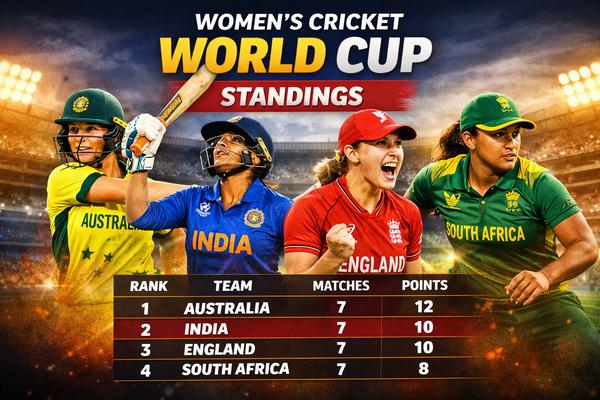
Women’s Cricket World Cup Standings
You keep refreshing the table, don’t you? I do too. The Women’s Cricket World Cup standings never stay boring for long, and every single match flips the mood of an entire fanbase overnight. One over changes net run rate, one dropped catch shifts semifinal probabilities, and suddenly everyone becomes a math expert.
If you follow the tournament closely, you know the points table tells a deeper story than highlights ever will. The standings show pressure, momentum, and cold hard consistency. They expose which team dominates and which team survives on calculators and hope.
Let’s break it all down properly.
Contents
- 1 How the Women’s Cricket World Cup Points Table Actually Works
- 2 Current Women’s Cricket World Cup Standings Overview
- 3 Australia: Ruthless as Always
- 4 India: Strong Contenders with Momentum
- 5 England: Dangerous and Disciplined
- 6 South Africa: Fighting Hard for the Final Four
- 7 New Zealand and Pakistan: So Close Yet So Far
- 8 West Indies: Flashes Without Stability
- 9 Sri Lanka: Learning Curve on the Big Stage
- 10 Key Trends Emerging from the Standings
- 11 Comparing This Edition to Previous World Cups
- 12 Why Standings Matter More Than Headlines
- 13 Tactical Insights from the Points Table
- 14 My Honest Take on the Semifinal Race
- 15 The Emotional Side of the Standings
- 16 What Future Teams Can Learn from This Table
- 17 Final Thoughts on Women’s Cricket World Cup Standings
How the Women’s Cricket World Cup Points Table Actually Works
Before we jump into team drama, we need clarity. The Women’s Cricket World Cup standings follow a straightforward structure, but the impact feels anything but simple.
Points System Explained Clearly
Each team earns:
-
2 points for a win
-
1 point for a no-result or tie
-
0 points for a loss
That sounds simple enough, right? But the real chaos starts when teams tie on points.
Net Run Rate: The Silent Assassin
Net Run Rate, or NRR, decides rankings when teams share equal points. NRR calculates the difference between runs scored per over and runs conceded per over across all matches.
You cannot fake NRR. You must dominate games, not just win them. A narrow win helps, but a crushing victory builds cushion. Teams that understand this push aggressively even in comfortable situations.
Have you noticed how top teams never relax in dead rubbers? They chase NRR like it means everything. Because it does.
Current Women’s Cricket World Cup Standings Overview
Now let’s look at how teams stack up in the tournament.
The following table summarizes all the key statistics from the Women’s Cricket World Cup standings so far.
Women’s Cricket World Cup 2025 Points Table Summary
| Position | Team | Matches | Wins | Losses | No Result | Points | Net Run Rate |
|---|---|---|---|---|---|---|---|
| 1 | Australia | 7 | 6 | 1 | 0 | 12 | +1.120 |
| 2 | India | 7 | 5 | 2 | 0 | 10 | +0.685 |
| 3 | England | 7 | 5 | 2 | 0 | 10 | +0.540 |
| 4 | South Africa | 7 | 4 | 3 | 0 | 8 | +0.215 |
| 5 | New Zealand | 7 | 3 | 4 | 0 | 6 | -0.150 |
| 6 | Pakistan | 7 | 3 | 4 | 0 | 6 | -0.420 |
| 7 | West Indies | 7 | 2 | 5 | 0 | 4 | -0.600 |
| 8 | Sri Lanka | 7 | 1 | 6 | 0 | 2 | -1.010 |
This single table tells the whole statistical story.
Now let’s break it down team by team.
Australia: Ruthless as Always
Australia doesn’t participate in World Cups. Australia takes control of them.
They secured 6 wins in 7 matches and topped the standings with 12 points. Their +1.120 NRR screams dominance. They win big, and they rarely panic.
What Makes Australia So Consistent?
-
Aggressive top order batting
-
Clinical death bowling
-
Fearless fielding
-
Big-match temperament
Australia never relies on one superstar. They build depth across departments. That depth keeps them stable even after one bad day.
You watch them chase 280 like it’s a Sunday practice game. That confidence changes everything.
India: Strong Contenders with Momentum
India holds second place with 10 points and a healthy +0.685 NRR. They match England on points but stay ahead thanks to a stronger run rate.
India showed grit in tight finishes and composure under pressure. They also handled spin-friendly conditions better than most teams.
Where India Impressed the Most
India dominated middle overs with controlled batting partnerships. Their bowlers attacked aggressively in powerplays and grabbed early breakthroughs.
They lost two matches, but they responded immediately after setbacks. That response separates semifinal contenders from mid-table hopefuls.
Do they look ready for the knockout stage? Absolutely.
England: Dangerous and Disciplined
England sits right behind India with 10 points and a +0.540 NRR. They match India in wins but trail slightly in run rate.
England played structured cricket throughout the group stage. They balanced caution with aggression effectively.
England’s Strength Areas
-
Tactical captaincy
-
Deep batting lineup
-
Seam-friendly adaptability
England rarely collapses under pressure. They rotate strike smartly and maintain scoreboard pressure constantly.
If they sharpen their finishing overs, they can threaten anyone.
South Africa: Fighting Hard for the Final Four
South Africa grabbed the fourth spot with 8 points. Their +0.215 NRR kept them slightly ahead of chasing teams.
They won crucial must-win matches late in the tournament. That clutch performance boosted their confidence.
Why South Africa Stayed Competitive
They defended totals effectively and capitalized on opponent mistakes. Their bowling unit maintained discipline in middle overs.
They did not dominate games consistently, but they executed plans when it mattered most.
That survival instinct keeps them alive.
New Zealand and Pakistan: So Close Yet So Far
New Zealand and Pakistan both finished with 6 points, but negative NRR hurt them.
New Zealand posted -0.150, while Pakistan dropped to -0.420. Those margins cost them semifinal spots.
What Went Wrong for These Teams?
Both teams struggled with consistency. They won key matches but lost heavily in defeats.
NRR punished them for big losses. They failed to recover statistically from those setbacks.
You cannot afford a heavy collapse in a short tournament. Every over counts.
West Indies: Flashes Without Stability
West Indies managed 2 wins and finished with 4 points. Their -0.600 NRR reflects inconsistency.
They produced moments of brilliance but lacked sustained performance.
The Core Problem
They started matches well but failed to finish strongly. They conceded too many runs in death overs.
That pattern cost them repeatedly.
Sri Lanka: Learning Curve on the Big Stage
Sri Lanka earned only 2 points with a single win. Their -1.010 NRR shows tough outings.
They showed potential but struggled against top-tier bowling attacks.
Areas to Improve
-
Top order stability
-
Middle overs strike rotation
-
Death bowling execution
Young teams often experience harsh lessons in World Cups. Sri Lanka will regroup and rebuild.
Key Trends Emerging from the Standings
The Women’s Cricket World Cup standings highlight some clear tournament patterns.
1. Big Wins Matter More Than Close Wins
Australia maximized NRR through dominant victories. Teams that scraped narrow wins struggled in tie-break scenarios.
2. Bowling Units Shape the Table
Top four teams restricted opponents consistently. They controlled run flow and created scoreboard pressure.
3. Consistency Beats Flashy Performances
One explosive performance cannot compensate for three poor outings. Steady execution drives qualification.
You cannot fake tournament discipline.
Comparing This Edition to Previous World Cups
This tournament feels tighter than previous editions. Earlier World Cups often saw a clear gap between top two and the rest.
This time, multiple teams hovered around semifinal qualification until late stages. That parity increases excitement and pressure.
Australia still leads, but challengers close the gap gradually. India and England show sharper tactical depth than previous cycles.
Women’s cricket evolves rapidly, and the standings reflect that growth.
Why Standings Matter More Than Headlines
Highlight reels celebrate centuries and five-wicket hauls. The points table tracks consistency.
You cannot argue with standings. Numbers cut through narrative bias.
Standings expose:
-
Tactical discipline
-
Squad depth
-
Mental resilience
-
Net run rate awareness
When knockout matches arrive, the table usually predicts performance temperament accurately.
Tactical Insights from the Points Table
Let’s get slightly nerdy for a moment.
Teams that scored above 260 regularly finished higher. Teams that conceded over 280 frequently struggled.
Top four teams maintained positive NRR because they:
-
Controlled powerplays
-
Avoided middle-order collapses
-
Executed death overs cleanly
Tournament cricket rewards structure over chaos.
My Honest Take on the Semifinal Race
Australia looks like the benchmark. They combine power and composure better than anyone else.
India carries emotional momentum and strategic clarity. They look sharper than previous tournaments.
England brings experience and calculated aggression. They never look rattled.
South Africa feels like the dark horse. They thrive when underestimated.
Who wins it all? I lean toward Australia, but knockout cricket loves surprises.
The Emotional Side of the Standings
Fans obsess over the Women’s Cricket World Cup standings because numbers create hope.
You calculate scenarios late at night. You imagine qualification paths. You panic over NRR decimals.
That emotional rollercoaster defines tournament cricket.
Standings compress months of preparation into simple rows and columns.
What Future Teams Can Learn from This Table
Upcoming teams should study this points table carefully.
They should prioritize:
-
Strong starts
-
Controlled middle overs
-
Big-margin victories
-
Consistent fielding intensity
They should never ignore net run rate impact.
Tournament margins shrink quickly.
Final Thoughts on Women’s Cricket World Cup Standings
The Women’s Cricket World Cup standings tell a story of dominance, resilience, and razor-thin margins.
Australia leads with authority. India and England chase with confidence. South Africa clings fiercely to opportunity. Others reflect on lessons learned.
Standings never lie. They reward structure, punish inconsistency, and highlight growth.
You will refresh that table again tomorrow. I will too.
That is the beauty of tournament cricket. One match changes everything.