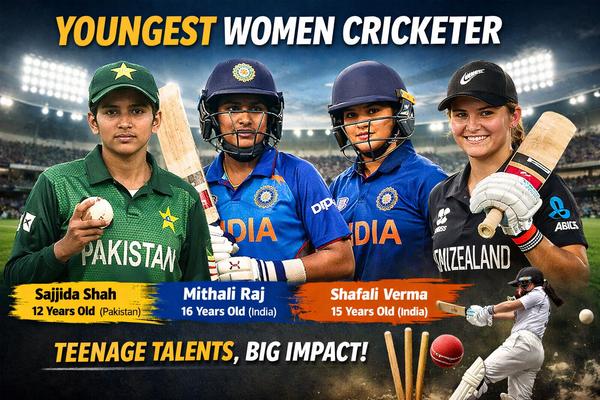
Youngest Women Cricketer
You ever watch a teenager walk out to bat against seasoned international bowlers and think, “Wait… how is she even old enough to drive?” That moment hits differently. Women’s cricket has produced some ridiculously young talents who stepped onto the biggest stages before most of us figured out what we wanted for dinner.
The youngest women cricketer stories don’t just entertain us. They challenge everything we assume about experience, pressure, and readiness. These players didn’t wait for permission. They grabbed a bat, smashed stereotypes, and told the cricket world to deal with it.
Let’s talk about the youngest women cricketer records, the fearless debuts, and the numbers that prove age doesn’t dictate impact.
Contents
- 1 Why Age in Women’s Cricket Actually Matters
- 2 The Youngest Women Cricketer in International Cricket History
- 3 Teenage Sensations Who Redefined the Game
- 4 The Rise of Youngest Women Cricketer in T20 Era
- 5 How Boards Identify Young Talent
- 6 The Pressure Young Cricketers Face
- 7 Age vs Performance: Does Younger Mean Better?
- 8 Youngest Women Cricketer Records by Format
- 9 Statistical Summary of Youngest Women Cricketer Milestones
- 10 The Under-19 Revolution
- 11 Physical and Mental Readiness at Young Age
- 12 Comparing Generations: Then vs Now
- 13 Social Media Impact on Youngest Women Cricketer Narratives
- 14 Youngest Women Cricketer and Longevity
- 15 The Psychological Edge of Youth
- 16 Countries Known for Young Women Cricketer Debuts
- 17 What Makes a Young Cricketer Truly Special?
- 18 The Future: Will We See Younger Debuts?
- 19 Why Fans Love Youngest Women Cricketer Stories
- 20 Key Takeaways
- 21 Final Thoughts
Why Age in Women’s Cricket Actually Matters
Age shapes perception. Fans expect maturity, tactical awareness, and emotional control in international cricket. When a 14 or 15-year-old walks in, critics raise eyebrows instantly.
But here’s the twist. Young players often bring raw confidence that older players sometimes overthink. They play instinctively. They chase runs without fear. They attack big names without worrying about reputations.
You can’t fake that kind of freedom.
Cricket demands skill, fitness, and mental strength. If a board selects a teenager, that board believes she can compete at the highest level immediately. That belief says everything.
The Youngest Women Cricketer in International Cricket History
Meet the Record Holder
The title of the youngest women cricketer to debut in international cricket belongs to Sana Mir’s era contemporary but even younger record-setters from South Asia, with Pakistan producing some of the earliest teenage debuts in the women’s game.
One of the most talked-about names in this conversation remains Sana Mir’s generation successor, Sajjida Shah, who debuted at an astonishingly young age.
She represented Pakistan at just 12 years and 171 days in 1997.
Let that sink in.
At 12, most kids stress about homework. She faced international bowlers.
That record still stands as one of the most jaw-dropping milestones in women’s cricket history.
Teenage Sensations Who Redefined the Game
Several players entered international cricket before turning 17. These cricketers didn’t just fill squad spots. They contributed immediately.
Mithali Raj – A Teenage Prodigy
When you mention young legends, you can’t ignore Mithali Raj.
She debuted for India at 16 years old in 1999. She scored an unbeaten 114 in her ODI debut. Yes, she scored a century in her first international match.
She didn’t ease into the game. She dominated from day one.
Her career later stretched beyond two decades, and she became one of the highest run-scorers in women’s ODIs. That debut proved she belonged.
Sachin Tendulkar Comparisons? Fair or Not?
People often compare teenage cricket prodigies to Sachin Tendulkar. The comparison feels lazy sometimes, but the age factor makes it inevitable.
Both debuted young. Both handled pressure early. Both carried expectations of an entire nation.
But women’s cricket didn’t offer the same infrastructure or spotlight back then. These young women performed without massive contracts or global hype machines behind them.
That reality makes their achievements even more impressive.
The Rise of Youngest Women Cricketer in T20 Era
T20 cricket changed everything.
Shorter formats reward fearless batting and athletic fielding. Younger players often thrive here because they attack naturally.
Boards started scouting aggressively for teenage talent once T20 leagues gained popularity.
Shafali Verma – Fearless from Ball One
You can’t discuss teenage dominance without mentioning Shafali Verma.
She debuted in international T20 cricket at 15 years old in 2019. She smashed bowlers without hesitation. She attacked powerplay overs like backyard cricket.
She quickly became one of the youngest women to represent India in T20 internationals.
She didn’t just survive. She struck at over 130 in T20Is early in her career. That aggression shifted India’s batting mindset.
Amelia Kerr – Young and Ruthless
Then comes Amelia Kerr.
She debuted for New Zealand at 16. She later scored a record-breaking 232 in an ODI at age 17*.
That innings remains one of the highest individual scores in women’s ODI history.
Youngest women cricketer discussions often focus on debut age. Kerr proved impact matters more.
How Boards Identify Young Talent
You might wonder, how does a 14-year-old even get noticed?
Here’s how it usually works:
-
Strong performances in Under-16 and Under-19 tournaments
-
Domestic league dominance
-
Exceptional fitness benchmarks
-
Mental strength assessments
-
Recommendation from national talent scouts
Modern cricket systems invest heavily in analytics. Selectors don’t gamble randomly. They evaluate strike rates, economy rates, temperament, and fielding efficiency.
If a teenager checks all boxes, she earns her cap.
The Pressure Young Cricketers Face
Let’s not romanticize everything.
A 15-year-old playing international cricket faces brutal scrutiny. Social media doesn’t spare teenagers. One failure triggers criticism instantly.
Young players must handle:
-
Media expectations
-
National pride pressure
-
Academic balance
-
Physical workload
-
Online trolling
Some thrive. Some struggle.
Strong mentoring systems matter more than raw talent.
Age vs Performance: Does Younger Mean Better?
Age doesn’t guarantee success.
Some players debut at 18 and struggle for consistency. Others debut at 25 and dominate instantly.
However, younger debuts offer longer career windows. That advantage increases cumulative records.
For example:
-
Early debut = More potential matches
-
More matches = Higher aggregate runs or wickets
-
Longer career = Leadership opportunities
That formula explains why many legends debuted early.
Youngest Women Cricketer Records by Format
Different formats showcase different youngest achievers.
ODI Format
ODIs demand endurance and tactical maturity. Young players who succeed here usually possess exceptional technique.
Teenage ODI debuts often surprise traditionalists.
T20 Format
T20 rewards fearless shot selection. Teenagers adapt faster to this high-tempo style.
Younger players often dominate powerplay overs because they swing freely.
Test Cricket
Very few modern teenage debuts occur in women’s Tests because countries schedule fewer matches. Earlier eras saw more teenage Test debuts.
Statistical Summary of Youngest Women Cricketer Milestones
Below, you’ll find a consolidated table summarizing key statistics related to some of the youngest women cricketers in international history.
| Player Name | Country | Age at Debut | Format Debut | Notable Achievement |
|---|---|---|---|---|
| Sajjida Shah | Pakistan | 12y 171d | ODI | Youngest international debut |
| Mithali Raj | India | 16y | ODI | 114* on ODI debut |
| Shafali Verma | India | 15y | T20I | Aggressive powerplay striker |
| Amelia Kerr | New Zealand | 16y | ODI | 232* in ODI at 17 |
These stats highlight one thing clearly: youth doesn’t limit achievement.
The Under-19 Revolution
The introduction of structured Under-19 women’s tournaments changed the pipeline entirely.
The ICC Under-19 Women’s T20 World Cup gave teenage players global exposure early. Scouts now track players from age 13 or 14 systematically.
This shift means we will likely see even younger women cricketers breaking records in the next decade.
The system encourages early specialization and structured training.
Physical and Mental Readiness at Young Age
Cricket requires more than timing and technique.
Young cricketers train intensely:
-
Strength conditioning
-
Agility drills
-
Nutrition planning
-
Sports psychology sessions
-
Video analytics review
Teenage players today prepare more professionally than many senior players did 20 years ago.
That professional ecosystem supports early debuts.
Comparing Generations: Then vs Now
Earlier generations lacked funding, exposure, and media attention.
Today’s teenage cricketers benefit from:
-
Central contracts
-
Professional coaching staff
-
Franchise league exposure
-
Advanced training facilities
However, earlier players displayed resilience without these advantages. That contrast adds respect to their records.
Would a 12-year-old debut even happen today? Probably not, because boards now emphasize physical maturity standards.
But history still honors those remarkable records.
Social Media Impact on Youngest Women Cricketer Narratives
Social media amplifies teenage sensations instantly.
A 15-year-old smashing 50 off 25 balls trends globally within minutes. Brands chase endorsements quickly.
That exposure creates opportunity and pressure simultaneously.
Young players must manage image, interviews, and expectations along with performance.
Not an easy combo.
Youngest Women Cricketer and Longevity
Early debuts often predict long careers, but not always.
Some teenage stars fade due to burnout. Others evolve steadily into captains and mentors.
Look at Mithali Raj’s career span. She led India across formats for years. Early exposure built her composure.
Longevity requires adaptability. Youth alone doesn’t guarantee sustained excellence.
The Psychological Edge of Youth
Teenagers sometimes play without fear because they haven’t experienced repeated failure yet.
They trust instinct over doubt.
Veterans analyze situations deeply. Young players react quickly.
Both approaches offer advantages.
When teams balance youth and experience properly, they build championship squads.
Countries Known for Young Women Cricketer Debuts
Historically, South Asian countries recorded younger debuts due to early talent scouting and domestic tournament structures.
Pakistan and India produced several teenage internationals.
New Zealand also backed young talent aggressively in certain phases.
Each board followed different philosophies regarding youth integration.
What Makes a Young Cricketer Truly Special?
Age grabs headlines. Skill sustains careers.
A truly special youngest women cricketer usually demonstrates:
-
Strong technique
-
Tactical awareness
-
Emotional resilience
-
Adaptability across formats
-
Consistent domestic performance
Selectors don’t pick based on age. They pick based on readiness.
If a 15-year-old outperforms a 25-year-old domestically, she deserves the cap.
Simple logic.
The Future: Will We See Younger Debuts?
Modern sports science might actually delay ultra-young debuts.
Boards now monitor workload carefully. They prefer gradual exposure.
However, T20 leagues could accelerate teenage visibility.
We might not see another 12-year-old debut. But 15 or 16-year-old sensations will continue emerging.
The pipeline keeps getting stronger.
Why Fans Love Youngest Women Cricketer Stories
Fans love watching fearless cricket.
We enjoy underdog narratives. A teenager smashing experienced bowlers feels cinematic.
It reminds us why we fell in love with cricket in the first place.
Pure intent. No overthinking. Just bat meets ball.
Young players bring that raw thrill.
Key Takeaways
Let’s summarize what matters most:
-
Sajjida Shah holds one of the youngest international debut records at 12 years and 171 days.
-
Mithali Raj scored 114 on her ODI debut at 16.*
-
Shafali Verma debuted at 15 and transformed India’s T20 powerplay approach.
-
Amelia Kerr smashed 232 at age 17 in ODIs.*
-
Youth offers opportunity, not guarantees.
-
Modern systems nurture teenage talent more professionally than ever.
Final Thoughts
The youngest women cricketer stories prove one simple truth: talent doesn’t wait for birthdays.
Some players grow into greatness gradually. Others announce themselves loudly before turning 18.
When a teenager walks onto the field wearing national colors, she carries dreams bigger than her age. She swings hard. She learns fast. She adapts quickly.
And honestly, watching that fearless energy feels refreshing.
Next time you see a 15-year-old smashing boundaries against world-class bowlers, don’t act surprised. Women’s cricket keeps evolving. Young stars keep rising.
Age sets the record. Performance builds the legacy.